Cadrivo
Loom Collection
Loom Collection
Couldn't load pickup availability
Share
Self-paced learning overview
- 📥 Digital file available after purchase
- ♾️ Long-term availability
- 🔒 Secure checkout
- 📅 Content updated in 2026
1. Problem Statement
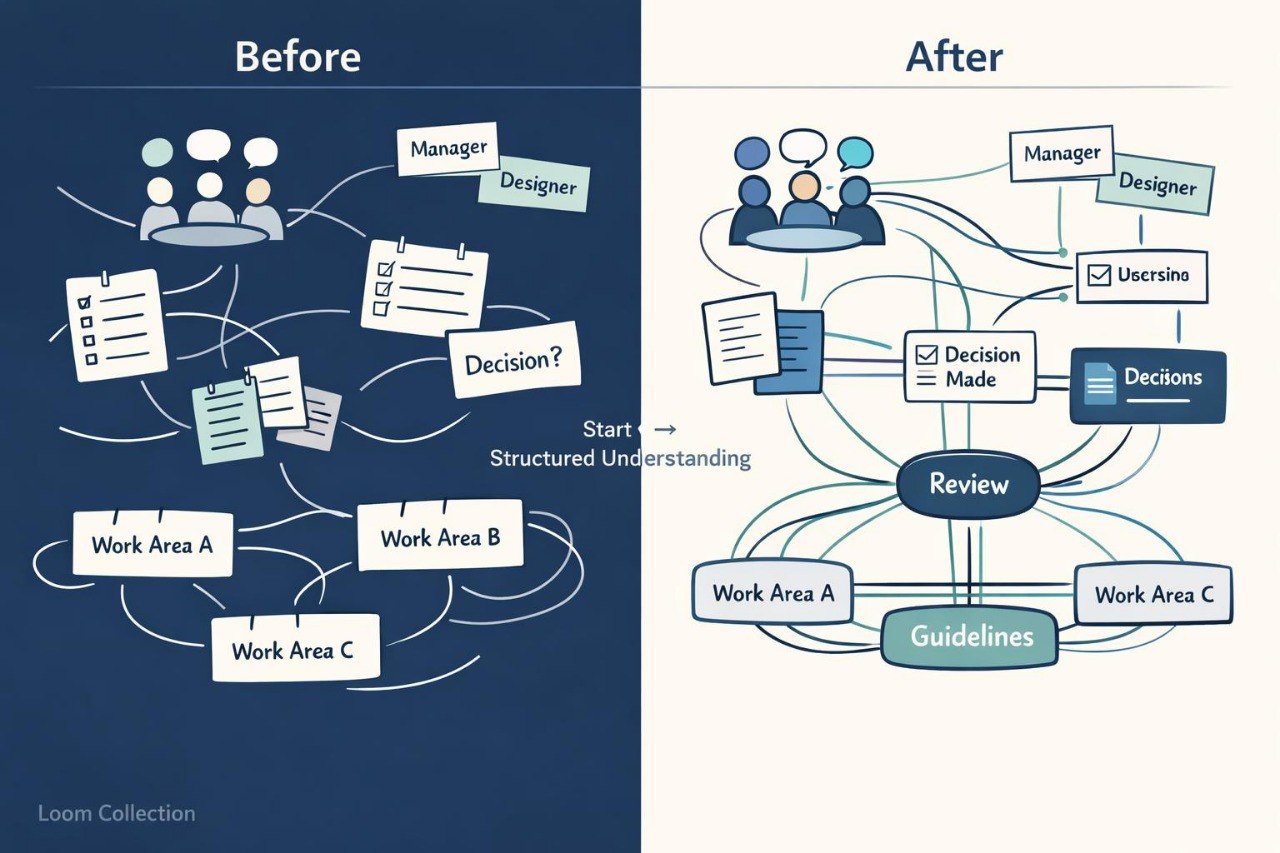
Struggling to coordinate a team when every work area follows a different set of routines? You are not alone: as a team expands, meetings, updates, decisions, and task handovers can gradually lose a shared structure. Some participants may expect verbal explanations, while others depend on written records, leaving the leader to connect several different approaches. This can lead to repeated information, overlapping responsibilities, and decisions that are not followed by defined actions. Without a shared working system, the team may spend more time coordinating separate parts than completing them in an organized sequence.
2. Solution
This course will teach you how to connect core team processes within a structured collaboration model. You will examine how to coordinate roles, meetings, working records, decisions, and responsibility handovers. The materials will help you identify which processes should follow a shared format and where the team needs flexibility. Practical assignments will show you how to create common working rules without unnecessary complexity or constant manual oversight. By the end of the course, you will prepare a complete operating framework for a team or selected work area.
3. What’s Inside
Module 1: The Framework of a Team System
You will identify the main elements of daily collaboration: roles, tasks, decisions, reviews, and information routes. The practical activity helps you create an initial map of current processes.
Module 2: Coordinating Working Rhythms
You will examine recurring meetings, updates, and review points. The assignment involves removing repeated activity and preparing a clear calendar of team interaction.
Module 3: Work Handover Guidelines
This module covers context, expected outcomes, deadlines, materials, and open questions. You will prepare a handover template for transferring a task between two roles.
Module 4: Levels of Team Decisions
You will group decisions into individual, shared, and leadership categories. A practical exercise helps identify which questions do not require further approval.
Module 5: A Shared Structure for Working Records
You will create a format for concise summaries, decisions, deadlines, and follow-up actions. The module helps make records understandable for different participants.
Module 6: Coordinating Several Work Areas
You will examine ways to connect parallel workflows. Particular attention is given to dependencies, shared resources, and interaction points.
Module 7: Distributing Workload and Participation
You will review who makes decisions, completes work, provides information, and reviews outcomes. The practical activity includes creating a participation matrix.
Module 8: Team Guidelines Without Excessive Oversight
This module explains how to define a focused set of agreements for independent work. You will identify boundaries within which participants can act without further approval.
Module 9: Reviewing the Team System
You will learn how to examine working guidelines after a completed cycle. The assignment helps you decide what should remain, change, or be removed.
Module 10: Creating the Loom Collection
In the final module, you will combine rhythms, roles, decisions, records, and handover guidelines. The outcome will be a complete team collaboration framework.
4. Who Is This For?
✅ Suitable if you:
- coordinate several areas of team work;
- manage recurring processes;
- want to align meetings, records, and decisions;
- want to reduce manual oversight;
- review the distribution of roles and workload.
❌ Not suitable if you:
- work only with personal tasks;
- require a legal description of job duties;
- need individual consulting;
- do not plan to create your own working materials;
- expect a ready-made framework without team adaptation.
5. What You’ll Learn
- Map at least seven team processes.
- Review a calendar of recurring interaction.
- Prepare two task-handover templates.
- Group at least ten decisions by responsibility level.
- Create one shared structure for working records.
- Build a dependency map across several work areas.
- Prepare a participation matrix for five or more roles.
- Write a focused set of team guidelines.
- Complete a written review of one work cycle.
- Produce a complete team collaboration framework.
6. Refund Terms
Loom Collection includes a 30-day period for submitting a payment refund request under the store’s published policy. The review may consider the order date, the amount of material already studied, and other conditions stated in the relevant section. Learners should read the current rules, listed exceptions, and submission procedure before placing an order.
7. Certificate
After completing all modules and required assignments, you will receive a Cadrivo certificate for Loom Collection. The document will state the course title and list the main subjects covered.
1. What format does the learning follow?
1. What format does the learning follow?
Each plan contains structured modules, written explanations, workplace examples, practical tasks, and materials for independent study. Learners can move through the content at their own pace, beginning with core ideas and continuing to applied team scenarios.
2. Is previous team management experience required?
2. Is previous team management experience required?
Previous experience is not required. The materials are suitable for people beginning to coordinate the work of others and for those who already work with teams but want a more structured approach to communication, delegation, and planning.
3. How do the plans differ?
3. How do the plans differ?
The plans are arranged in a gradual order of content depth. Higher plans may include additional modules, broader topic coverage, further examples, templates, practical exercises, and materials for reviewing team situations.
4. Is a certificate included?
4. Is a certificate included?
A Cadrivo certificate is provided after all required modules and assignments in the selected plan have been completed. It records participation in the learning program but does not represent a government qualification, professional license, or employment credential.