Cadrivo
Drift Lineup
Drift Lineup
Couldn't load pickup availability
Share
Self-paced learning overview
- 📥 Digital file available after purchase
- ♾️ Long-term availability
- 🔒 Secure checkout
- 📅 Content updated in 2026
1. Problem Statement
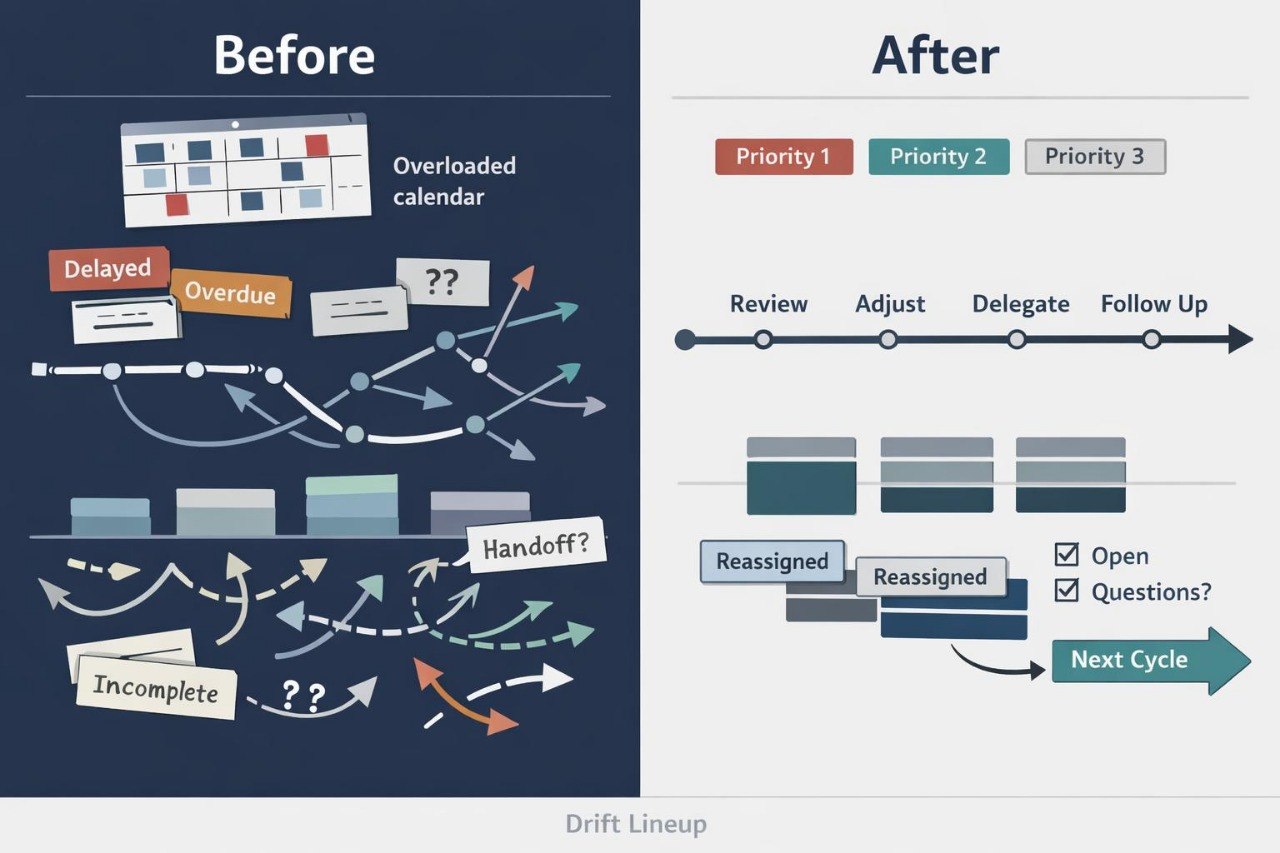
Struggling to coordinate a team when the original plan keeps changing? You are not alone: new tasks, revised deadlines, and resource constraints can gradually move a team away from its agreed direction. When changes are not discussed in time, participants may continue working from different versions of the plan. Some team members may carry too many active responsibilities, while others wait for information or dependent tasks. Without regular review, the team may spend time on work that no longer reflects current priorities.
2. Solution
This course will teach you how to identify changes in a team plan and respond to them in a structured manner. You will examine how to review priorities, assess workload, and explain updates to different participants. The materials will help you separate temporary delays from changes that require a new division of work. Practical assignments will show you how to conduct a concise team status review and document revised agreements. By the end of the course, you will create your own plan-review model for periods of change.
3. What’s Inside
Module 1: How Plans Begin to Drift
You will examine common causes of changes in deadlines, priorities, and team workload. A practical exercise will help you distinguish an isolated delay from a recurring pattern.
Module 2: Signals Worth Monitoring
This module covers repeated postponements, growing unfinished work, missing information, and uneven responsibility distribution. You will prepare a list of signals for regular team reviews.
Module 3: Reviewing Current Priorities
You will learn how to compare active tasks with team goals, deadlines, and available resources. The assignment involves reviewing one real or practice-based work plan.
Module 4: Mapping Team Workload
You will create a map showing active tasks, dependencies, and responsible participants. This activity helps identify overloaded roles and work that has not been assigned.
Module 5: Reassigning Team Tasks
This module explains how to change task ownership while preserving relevant context. You will prepare a concise handover note for transferring work to another participant.
Module 6: Discussing a Plan Change
You will review a message structure that explains the reason for a change, its impact, and the revised actions. The practical assignment includes drafting a team update.
Module 7: Managing Open Questions
You will learn how to record decisions that have not yet been made and identify who should provide the missing information. A dedicated exercise focuses on creating an open-question log.
Module 8: Reviewing a Completed Work Cycle
This module helps you compare planned activity with completed work without assigning personal blame. You will prepare a list of observations and adjustments for the next cycle.
Module 9: Creating the Drift Lineup
In the final module, you will combine drift signals, workload mapping, revised priorities, and communication rules. The outcome will be a structured framework for reviewing team activity.
4. Who Is This For?
✅ Suitable if you:
- coordinate a team during frequent changes;
- revise deadlines and task ownership;
- want to identify workload concerns earlier;
- manage several connected areas of work;
- explain updates to a shared team plan.
❌ Not suitable if you:
- work only with personal tasks;
- require a legal or human resources assessment;
- need an individual review of your organization;
- do not plan to complete practical exercises;
- are looking only for personal motivation materials.
5. What You’ll Learn
- Identify at least five signals of movement away from a plan.
- Review one team plan using defined criteria.
- Build a workload map for four or more roles.
- Find at least two areas of uneven work distribution.
- Prepare two examples of task handover notes.
- Draft one message explaining a priority change.
- Create an open-question log.
- Complete a written review of one work cycle.
- Build your own framework for revising a team plan.
6. Refund Terms
Drift Lineup includes a 30-day period for submitting a payment refund request under the store’s published policy. The review may consider the order date, the amount of material already studied, and other conditions listed in the rules. Learners should read the current policy, stated exceptions, and submission procedure before placing an order.
7. Certificate
After completing all modules and required assignments, you will receive a Cadrivo certificate for Drift Lineup. It will state the course title and the main subjects included in the learning program.
1. What format does the learning follow?
1. What format does the learning follow?
Each plan contains structured modules, written explanations, workplace examples, practical tasks, and materials for independent study. Learners can move through the content at their own pace, beginning with core ideas and continuing to applied team scenarios.
2. Is previous team management experience required?
2. Is previous team management experience required?
Previous experience is not required. The materials are suitable for people beginning to coordinate the work of others and for those who already work with teams but want a more structured approach to communication, delegation, and planning.
3. How do the plans differ?
3. How do the plans differ?
The plans are arranged in a gradual order of content depth. Higher plans may include additional modules, broader topic coverage, further examples, templates, practical exercises, and materials for reviewing team situations.
4. Is a certificate included?
4. Is a certificate included?
A Cadrivo certificate is provided after all required modules and assignments in the selected plan have been completed. It records participation in the learning program but does not represent a government qualification, professional license, or employment credential.